Skip to content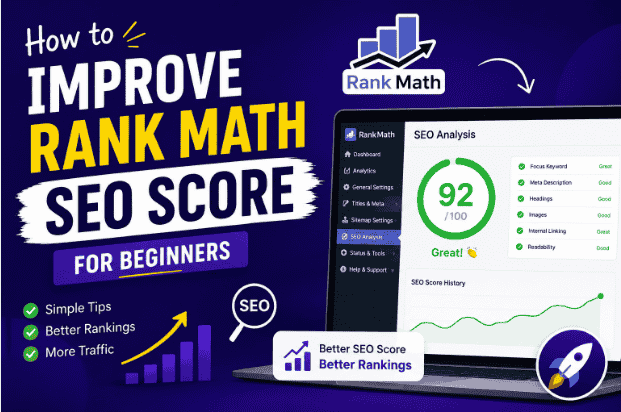
I still remember the first time I installed Rank Math SEO on my blog.
I thought it would magically fix my SEO problems overnight.
Instead, I opened the editor and saw a confusing mix of:
- red warnings
- orange circles
- random suggestions
- SEO scores stuck around 40
Honestly, I became obsessed with that score for a while.
Every time I published a blog post, I kept refreshing the Rank Math panel trying to push the score into green.
Sometimes I even ruined my own writing just to increase the number.
After using Rank Math for a longer time, I realized something important:
the SEO score is helpful, but understanding why the plugin gives certain suggestions matters much more.
Once I stopped treating Rank Math like a game and started using it properly, improving scores became much easier — and my articles also felt more natural to read.
So if you’re a beginner struggling with low Rank Math scores, this guide will help you understand what actually matters and what beginners usually overcomplicate.
What Rank Math SEO Score Actually Means
A lot of beginners misunderstand this.
The score inside Rank Math is basically a checklist.
It checks whether your article includes:
- keywords
- headings
- internal links
- readable structure
- meta descriptions
- image optimization
- other basic SEO signals
A higher score usually means your article follows more SEO best practices.
But here’s something important:
a 100/100 score does not automatically mean your article will rank #1 on Google.
I learned that the hard way.
Some of my highest-scoring articles got almost no traffic, while a few lower-scoring articles performed surprisingly well because they felt more useful and natural.
The First Mistake Beginners Make
Most beginners become obsessed with reaching:
- 90
- 95
- 100
before publishing.
I used to do the same thing.
The problem is:
forcing every SEO suggestion blindly can make articles sound robotic.
For example:
some beginners repeat the same keyword too many times just to increase the score.
That usually hurts readability.
Google has become much smarter now.
Natural writing matters a lot.
Start With the Focus Keyword Properly
One thing that immediately improved my Rank Math scores was choosing a clear focus keyword before writing.
Bad approach:
trying to target 10 keywords in one article.
Better approach:
focus on one main topic.
For example:
instead of writing vaguely about “SEO,” use something more specific like:
- “How to Improve Rank Math SEO Score”
- “SEO Tips for Beginner Bloggers”
- “Why My Blog Posts Are Not Ranking”
Longer keywords are usually easier for beginner blogs.
Add the Keyword Naturally in Important Places
Rank Math usually checks whether your focus keyword appears in key sections.
I now naturally include the keyword in:
- the title
- first paragraph
- one or two headings
- meta description
- image alt text
But I avoid forcing it everywhere.
Here’s a mistake I made before:
Bad example:
“Rank Math SEO score is important because Rank Math SEO score helps improve Rank Math SEO score.”
That sounds terrible.
Natural writing always works better.
Write Better Headings
Headings improved both my SEO score and readability.
Instead of writing giant walls of text, I started separating sections clearly.
Good headings help:
- readers scan content faster
- search engines understand topics better
- Rank Math score improve naturally
For example:
instead of:
“Things To Know”
Try:
“How Internal Linking Helps SEO”
Specific headings usually work better.
Internal Linking Helped More Than I Expected
Honestly, I ignored internal linking when I first started blogging.
Then I realized Rank Math repeatedly suggested it.
Internal linking means connecting one article to another related article on your website.
For example:
if you write about blogging SEO, you can link to:
- beginner blogging guides
- keyword research articles
- indexing tutorials
Internal links help:
- visitors explore your website
- search engines understand content relationships
- reduce bounce rate sometimes
Now I try adding at least:
- 2 to 4 internal links
in most articles.
Don’t Skip Meta Descriptions
At first, I thought meta descriptions were optional.
Technically they are.
But adding them improves:
- click-through rates
- SEO organization
- Rank Math score
A good meta description should:
- summarize the article clearly
- sound natural
- encourage clicks without sounding spammy
Bad example:
“Best SEO article best SEO tips SEO score improve SEO.”
Good example:
“Learn simple ways beginners can improve Rank Math SEO scores without making articles sound robotic.”
Short and natural works better.
Image Optimization Matters More Than I Thought
I used to upload random large images directly to WordPress without checking anything.
That slowed down my site.
Now I usually:
- compress images
- rename image files properly
- add alt text
Example alt text:
“how to improve rank math seo score for beginners”
Simple optimization helps both SEO and page speed.
Tools beginners commonly use:
- TinyPNG
- ShortPixel
Why Readability Is Important
One thing I like about Rank Math is that it also checks readability.
Honestly, this helped me improve writing quality a lot.
Before, my paragraphs were too long and tiring to read.
Now I try to:
- keep paragraphs short
- use simple language
- separate ideas clearly
- avoid unnecessary jargon
This not only improves readability scores but also keeps visitors on the page longer.
Common Rank Math Mistakes Beginners Make
1. Keyword Stuffing
This is extremely common.
Beginners repeat keywords unnaturally because they think more keywords automatically mean better rankings.
Usually the opposite happens.
2. Chasing Perfect Scores
I wasted too much time trying to increase articles from:
- 82 to 90
- 90 to 95
instead of publishing more content.
A good useful article with a score of:
- 60
- 70
- 80
can still perform very well.
3. Ignoring User Experience
SEO is not just about pleasing plugins.
If visitors:
- leave quickly
- feel confused
- dislike reading your article
high scores alone won’t help much.
4. Writing Only for Search Engines
Articles should still sound human.
Some SEO-optimized content becomes painfully robotic.
Real readers notice that immediately.
A Simple SEO Routine That Works for Me
Once I stopped overcomplicating SEO, this became my normal workflow:
Step 1 – Pick One Main Keyword
I choose one clear long-tail keyword.
Step 2 – Write Naturally First
I focus on helping readers before worrying about scores.
Step 3 – Add Basic SEO
I check:
- title
- headings
- keyword placement
- meta description
- image alt text
- internal links
Step 4 – Improve Readability
I shorten:
- paragraphs
- sentences
- complicated wording
Step 5 – Publish Without Obsessing
This honestly reduced stress a lot.
Sometimes publishing consistently matters more than endlessly adjusting SEO details.
What Helped My Scores Improve Faster
The biggest improvement came when I:
- stopped keyword stuffing
- focused on useful content
- added better headings
- improved internal linking
- wrote more naturally
Ironically, once I focused less on “gaming the score,” my scores improved more consistently anyway.
Is a Low Rank Math Score Always Bad?
Not necessarily.
Some articles with:
- 55
- 60
- 70
can still rank well if:
- the topic has low competition
- the article is helpful
- users stay on the page
- search intent is satisfied
The plugin gives useful guidance, but it’s not Google itself.
That mindset helped me stop panicking over every orange warning.
Final Thoughts
Rank Math is honestly one of the most beginner-friendly SEO plugins I’ve used, but it becomes much more useful once you stop treating the score like a competition.
The goal is not to create robotic articles just to turn circles green.
The real goal is:
- helping readers
- organizing content better
- improving SEO gradually
- building good writing habits
If you focus on those things consistently, your scores usually improve naturally over time anyway.
FAQs
What is a good Rank Math SEO score for beginners?
A score between 60 and 80 is usually considered good for beginner blogs with natural writing.
Does a high Rank Math score guarantee Google rankings?
No, good content quality and user experience also matter for rankings.
Why is my Rank Math score low?
Common reasons include missing keywords, weak headings, no internal links, or missing meta descriptions.
How can beginners improve Rank Math scores quickly?
Adding proper headings, internal links, image alt text, and a clear focus keyword can help improve scores.
Should beginners focus only on SEO scores?
No, articles should still sound natural and helpful instead of overly optimized for plugins.

Hi, I’m the creator of Trend Verse — a digital platform focused on technology, AI tools, blogging, SEO, WordPress, and online earning. My goal is to share simple, practical, and beginner-friendly guides that help people learn digital skills, grow online, and stay updated with the latest tech trends.